
The Hidden Hazard on Every Trail: What Central Oregon Pet Owners Need to Know About Foxtails & Cheatgrass
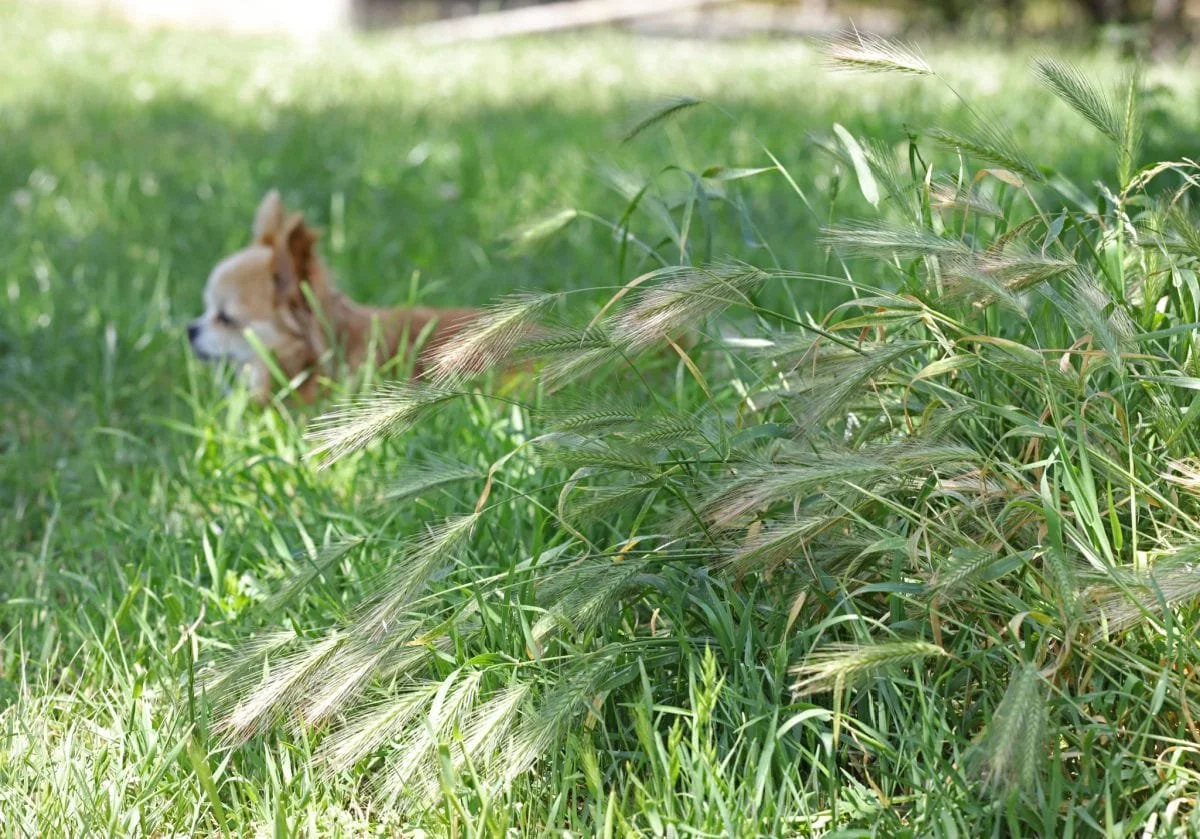
A field full of foxtails
Every summer, dogs across Central Oregon come into the clinic with a problem their owners never saw coming. The culprit is usually something smaller than a fingernail — a foxtail or a cheatgrass awn.
These two invasive grasses are among the most serious warm-weather hazards we treat, and they grow abundantly throughout the high desert — along roadsides, trailheads, open fields, and even in neighborhoods. They're easy to overlook. But for dogs (and occasionally cats), the window between "no big deal" and "emergency" can close faster than most pet owners realize.
Two Plants, the Same Dangerous Design
Foxtails and cheatgrass are different species, but they share a critical trait: both produce seed heads with backward-facing barbs engineered by nature to move in only one direction — forward. Once either type of awn works its way into fur or skin, it doesn't stop. It migrates.
Cheatgrass — the wispy, reddish-purple grass that blankets so much of Central Oregon in spring and turns brittle and straw-colored by summer — is in many ways the more insidious of the two because of how fine and numerous its awns are. A single romp through a cheatgrass patch can leave a dog embedded with dozens of seeds simultaneously, many of which are too small to spot easily against the coat.
Foxtails tend to be larger and more recognizable, but no less dangerous. A foxtail lodged between a dog's toes can burrow deep into the paw. One inhaled through the nose can migrate toward the lungs. Seeds that enter through the ear canal can reach the eardrum or beyond. We've seen both foxtails and cheatgrass cause internal abscesses, serious infections, and in severe cases, life-threatening complications — all starting from a single seed on a summer hike.
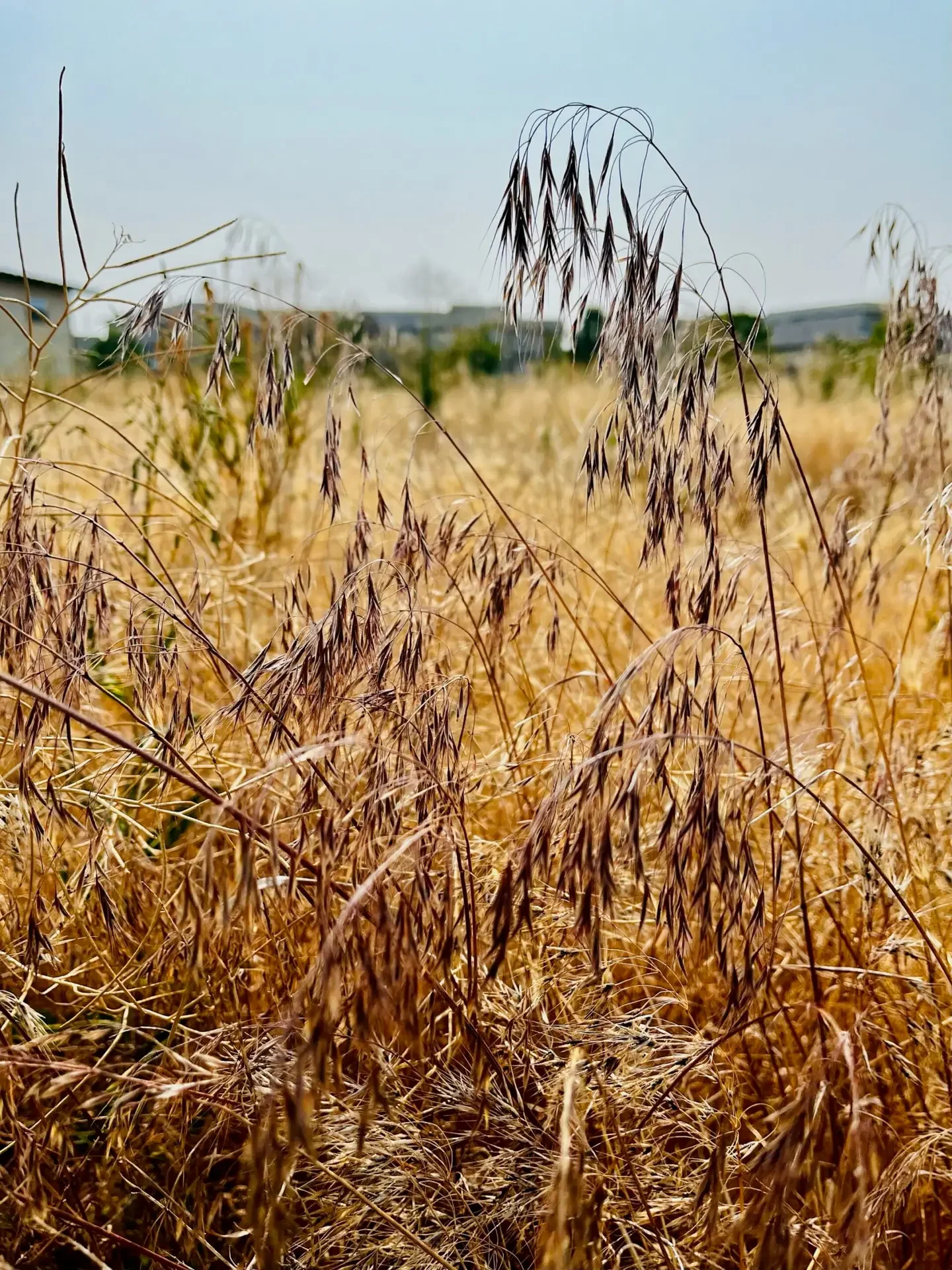
Dried cheatgrass is very dangerous to dogs
Where Pets Pick Them Up
In Central Oregon, both grasses peak from late spring through early fall. Cheatgrass in particular is nearly impossible to avoid — it's one of the most widespread invasive plants in the region, thriving in disturbed soil along trails, ditches, vacant lots, and dry meadows. High-risk areas for both include the edges of trails (especially off-leash areas near Shevlin Park and the Deschutes River Trail), open desert terrain, and any area with dry, unmaintained vegetation.
Short-haired dogs tend to show symptoms faster, but long-haired breeds are at higher risk for seeds going undetected under the coat — sometimes for days.
Signs to Watch For
Symptoms depend on where the awn has traveled:
Paws: Limping, excessive licking, swelling, or a small draining wound
Ears: Vigorous head shaking, head tilting to one side, pawing at the ear
Nose: Sudden, violent sneezing (often repetitive), pawing at the face, or nasal discharge
Eyes: Squinting, discharge, or a visible bump near the eyelid
Skin/body: A small lump that appears out of nowhere, often with a tiny opening
If you notice any of these signs after time outdoors, don't wait to see if it resolves. Foxtails and cheatgrass rarely work themselves out — and delay almost always makes removal more complicated and costly.
What You Can Do Right Now
Before every outdoor adventure this season, take a few minutes after returning home to run your hands through your pet's coat — paying close attention to the ears, between the toes, the armpits, and the groin area. A fine-toothed comb is helpful for long-haired dogs. For pets that spend a lot of time on trails, consider trimming the fur around the ears and paws during peak season to reduce the places these seeds can hide.
If your pet is a frequent trail companion, a quick once-over after every outing is one of the simplest and most effective things you can do — because with both of these grasses, what you catch early stays simple. What you miss has a way of becoming something much bigger.
If something doesn't look or feel right after a day outside, trust that instinct and call us. At High Desert Veterinary, we'd much rather spend five minutes on prevention than hours on a complicated removal.
