
What Your Pet's Mouth Is Telling You (And Why Spring Is the Perfect Time to Listen)
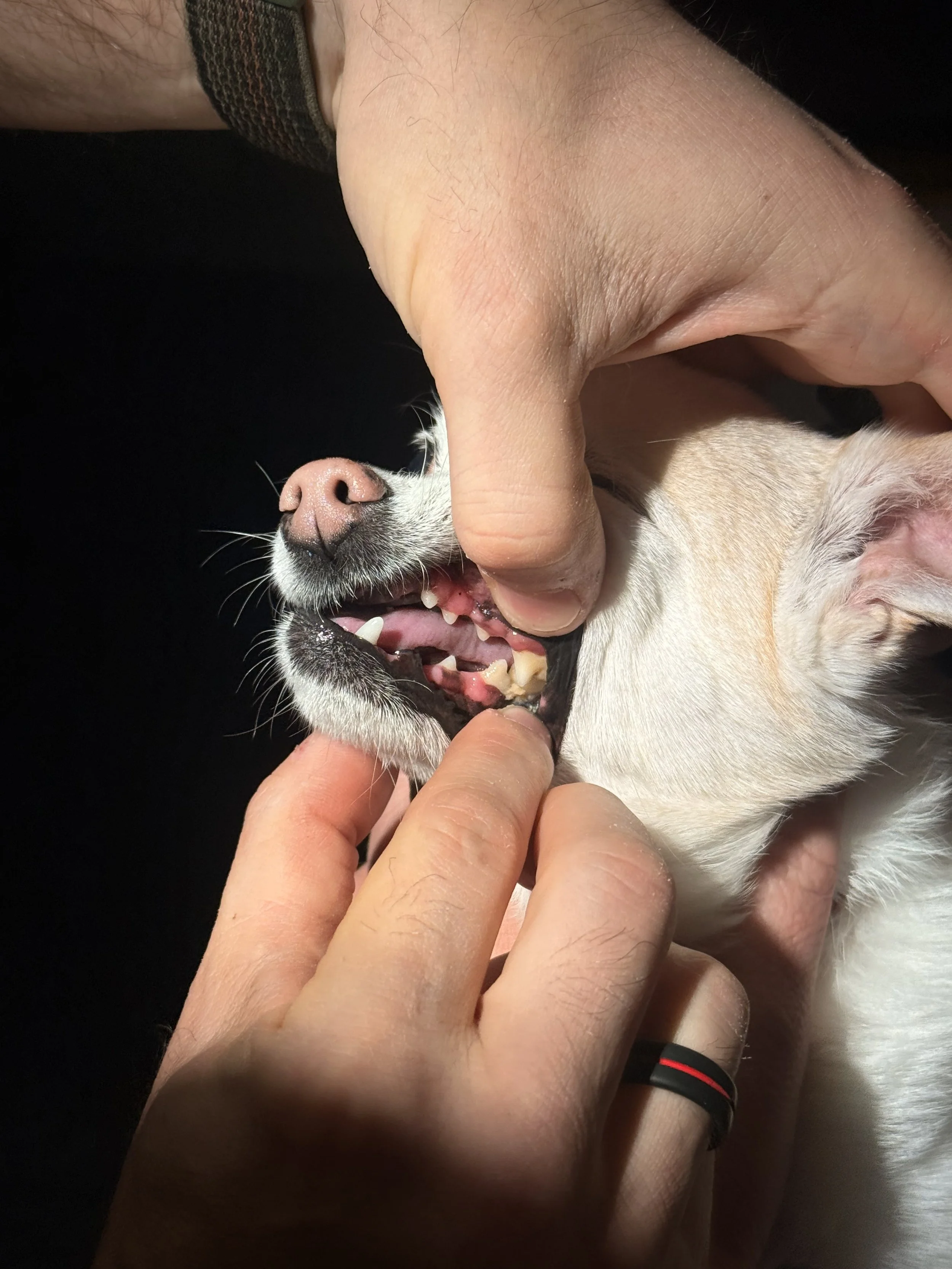
A HDV patient after a dental cleaning looking (and smelling) a lot healthier
If your dog or cat could talk, their mouth might have a lot to say — and most of it wouldn't be good news.
Dental disease is the most commonly diagnosed health condition in adult pets. By age three, the majority of dogs and cats have some degree of periodontal disease. By middle age, many are living with significant inflammation, infection, or tooth damage — often without showing obvious signs that anything is wrong.
That's the part that catches most pet owners off guard. Dental disease is quiet. Pets are remarkably good at hiding oral discomfort, which means problems tend to go unnoticed until they're well advanced.
What's Actually Happening in There
It starts with plaque — a soft bacterial film that coats the teeth daily. When plaque isn't removed, it mineralizes into tartar (that yellow-brown buildup you might notice along the gumline). Tartar creates a rough surface where more bacteria thrive. Over time, that bacterial load drives inflammation of the gums — gingivitis — and eventually begins to destroy the structures that hold teeth in place: the ligaments, bone, and connective tissue beneath the gumline.
Once periodontal disease advances past the gumline, it becomes painful, difficult to reverse, and carries consequences well beyond the mouth. Chronic oral bacteria can enter the bloodstream and contribute to changes in the kidneys, liver, and heart over time. What starts as a dental problem rarely stays one.
Signs That Something May Be Off
Because pets mask discomfort so well, the signs are often subtle:
Bad breath (more than normal "dog breath")
Yellow or brown buildup along the gumline
Reddened or bleeding gums
Dropping food, chewing on one side, or eating more slowly than usual
Pawing at the mouth or face
Decreased interest in chew toys or harder food
Unexplained weight loss in cats
Some pets show none of these signs even with significant disease. The only way to truly assess dental health is with a thorough oral exam — and in many cases, dental X-rays taken under anesthesia, which allow us to see what's happening below the gumline where most disease activity occurs.
What a Dental Cleaning at HDV Actually Involves
A professional dental cleaning with us is a full medical procedure, not just a polish. Your pet is placed under general anesthesia (which allows for a safe, thorough, stress-free exam), and we perform scaling above and below the gumline, charting of every tooth, probing for pockets, and dental radiographs when indicated. If extractions or additional treatment are needed, we address them in the same visit whenever possible.
We know anesthesia is a concern for some pet owners, and we take that seriously. Our protocols include pre-anesthetic bloodwork, individualized anesthetic planning, and continuous monitoring throughout the procedure.
Why Spring Makes Sense
Winter tends to be a quieter season for scheduling, and spring brings a natural desire to get pets feeling their best before summer activity picks up. If it's been over a year since your pet's last dental exam — or if you've never had one — now is a good time to ask.
Call us at High Desert Veterinary to schedule a dental evaluation. A quick look in the right hands can tell us a great deal, and early intervention almost always means simpler treatment and better outcomes.
